

Develop a Structured Approach to Big Data Programming
Paths Through Data at Scale
-
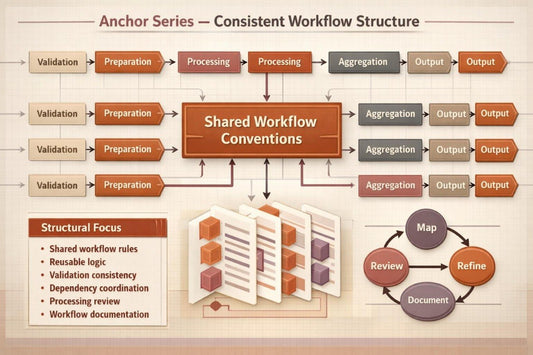
Anchor Series
Regular price €249,00 EURRegular price -
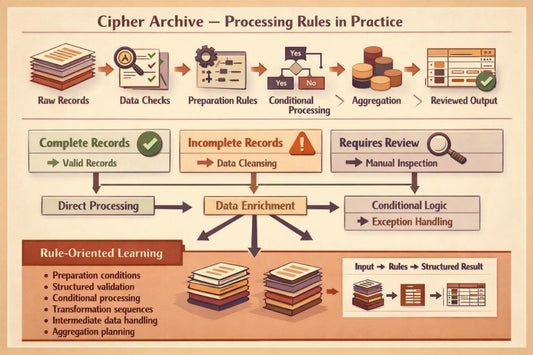
Cipher Archive
Regular price €195,00 EURRegular price -
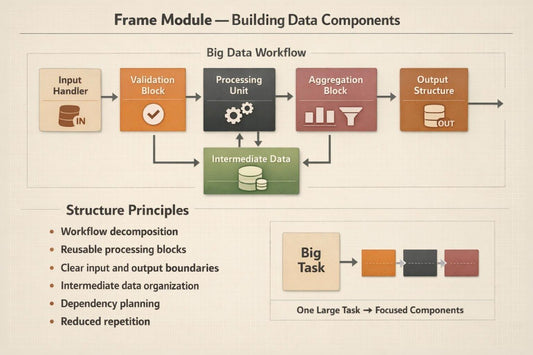
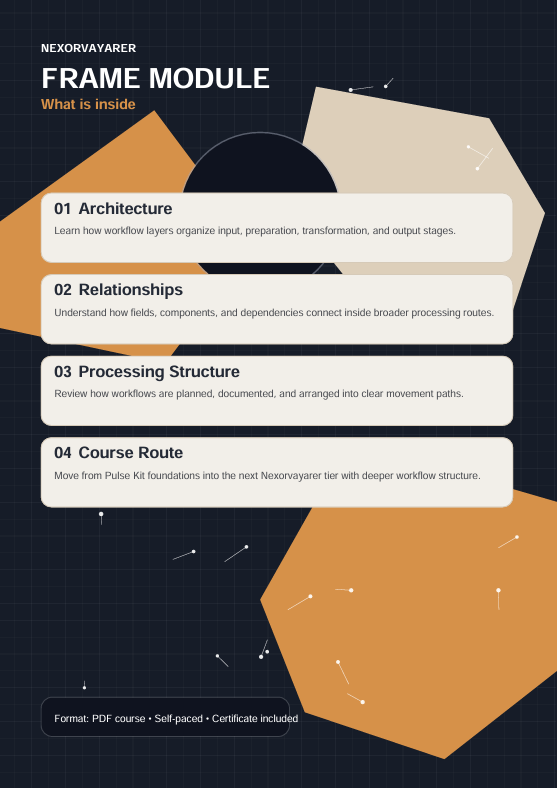
Frame Module
Regular price €119,00 EURRegular price -




Built From a Need for Clearer Data Learning
Available on all devices


30-days refund guarantee

Bring Structure to Big Data Learning
The People Behind the Learning Structure
-

Melise Kensington
Data Workflow Engineer
Melise designs structured workflows that connect data preparation, validation, processing, and output stages. Her work includes mapping dependencies and defining clear responsibilities between processing components. She also develops reusable structures for handling recurring operations across larger data projects. -

Trina Langford
Data Quality Engineer
Trina focuses on identifying inconsistent, or incorrectly structured records within large datasets. Her work includes validation rules, preparation procedures, classification logic, and data-quality documentation. She organizes these checks into clear stages so later processing can work with more consistent information. -

Dean Mercer
Data Pipeline Architect
Dean plans multi-stage pipelines that move information from raw inputs through validation, preparation, and structured outputs. His work focuses on dependency mapping, reusable processing components, and clear workflow boundaries. He regularly reviews pipeline structures to identify repetition and improve overall organization.


What Each Module Adds to Your Learning
-

Clear Progress
Each course follows an organized sequence that connects foundational data concepts with increasingly detailed workflow and architecture topics.
-

Practical Context
Exercises and examples place programming concepts inside realistic data-processing scenarios so learners can examine how individual stages work.
-

Workflow Thinking
Course files encourage learners to map inputs, processing stages, intermediate structures, and outputs before approaching larger programming tasks.
-

Detailed Files
Diagrams, explanations, reference materials, and review activities provide several ways to examine and revisit important Big Data Programming concepts.


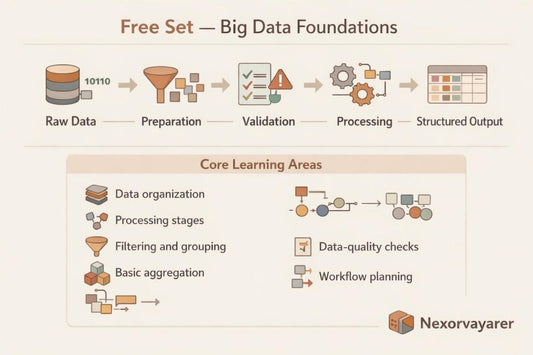
Begin with a Free Learning Resource

Notes From the Learning Journey
-

Trevor Whitman
Trevor had worked with smaller datasets and wanted a clearer way to approach tasks involving multiple sources, intermediate results, and connected processing stages. He found the architecture maps and dependency-planning exercises useful because they presented larger programming structures as smaller, clearly defined components.
“I found the workflow maps especially useful because they showed where each processing stage begins and what it contributes.” -

Talia Prescott
Talia came to the materials after studying programming independently and wanted a more organized framework for examining multi-stage data-processing tasks. She found the combination of written explanations, structured examples, and visual processing maps useful for comparing different ways of arranging the same workflow.
“The examples gave me a clearer way to think about inputs, dependencies, intermediate data, and outputs as connected parts.”


